

Traveling to India from Spain, Mexico, or Latin America: India Travel Guide
India is a country that can be difficult to describe in just a few words. This India travel guide for Spanish-speaking travelers introduces a destination of ancient cities, sacred rivers, colorful festivals, historic monuments, diverse landscapes, rich cuisine, and living traditions.
For Spanish-speaking travelers from Spain, Mexico, Argentina, Chile, Colombia, Peru, and other Latin American countries, visiting India can be an exciting opportunity to experience a culture very different from their own.
But planning your first trip to India can also raise many questions.
How do you plan an India itinerary? Which places should you visit? What should you know about Indian culture? What is the best way to travel between cities? Do you need a visa? And how can you experience India’s spiritual traditions respectfully?
This India travel guide for Spanish-speaking travelers covers the essential points to help you plan a meaningful and comfortable journey.
Why Travel to India?
India offers something different from a conventional sightseeing holiday.
You can watch the sunrise over the Ganges in Varanasi, explore the temples of Ayodhya, see the Taj Mahal in Agra, experience the colors of Holi, spend time in a yoga retreat, explore Buddhist heritage in Bodh Gaya, or discover the landscapes of the Himalayas.
For travelers interested in spirituality, culture, history, food, and meaningful experiences, India can be particularly rewarding.
One of the most interesting aspects of traveling in India is that many traditions are not simply displayed for visitors. They are part of everyday life.
A temple ceremony, morning prayer, local market, or evening Ganga Aarti can be a genuine cultural experience rather than simply another sightseeing stop.
Is India Suitable for Spanish-Speaking Travelers?
Yes. You do not need to speak Hindi to travel around India.
English is widely used in tourism, hotels, transportation, and many major tourist destinations. However, communication can sometimes be easier when you have local assistance, particularly when visiting smaller cities or travelling through several regions.
For Spanish-speaking travelers, having a well-organized itinerary can also make the journey more comfortable.
A local travel company such as Dhyanam India Tours can help coordinate transportation, accommodation, sightseeing, and experiences, with Spanish-speaking guide assistance available for travelers who prefer to explore India with support in their own language.
If language is important to you, you can also ask your tour provider whether Spanish-speaking guides or assistance are available for your itinerary.
What Should You Know Before Traveling to India?
India is a large and diverse country. One of the most important things to understand before your trip is that traveling between destinations can take time. This India travel guide for Spanish-speaking travelers can help you plan your journey with realistic travel times in mind.
Delhi, Agra, Jaipur, Varanasi, Ayodhya, Bodh Gaya, and other destinations may look relatively close on a map, but actual travel times depend on the route and transportation.
Instead of trying to see everything in one trip, choose destinations according to your interests.
For example:
Culture and history:
Delhi → Agra → Jaipur → Varanasi
Spiritual India:
Ayodhya → Varanasi → Bodh Gaya → Rishikesh
Spirituality and culture:
Delhi → Agra → Ayodhya → Varanasi → Bodh Gaya
Festival-focused travel:
Your itinerary can be planned around experiences such as Holi, Diwali, or other major Indian festivals.
A thoughtful itinerary generally provides a better experience than trying to visit too many cities in a short period.
Visa for India: What Spanish-Speaking Travelers Should Know
Foreign travelers generally need a valid passport and an appropriate Indian visa to enter the country. Visa requirements depend on nationality and the purpose of travel.
India offers an e-Visa system for eligible nationalities and travel purposes, including tourism. The official e-Visa website provides the current eligibility requirements, application process, and applicable fees.
For example, the official Indian tourism information specifically lists Spain among the nationalities with e-Visa options.
Before booking your trip, always check the latest requirements for your specific passport through the official Indian government visa resources.
For e-Tourist Visa applications, the official portal currently states that applicants should have a passport with at least six months’ validity and sufficient blank pages, along with a return or onward ticket and sufficient funds for their stay.
Tip: Do not rely on an old blog post for visa information. Requirements can change, so verify the current rules before traveling.
Best Places to Visit in India for First-Time Travelers
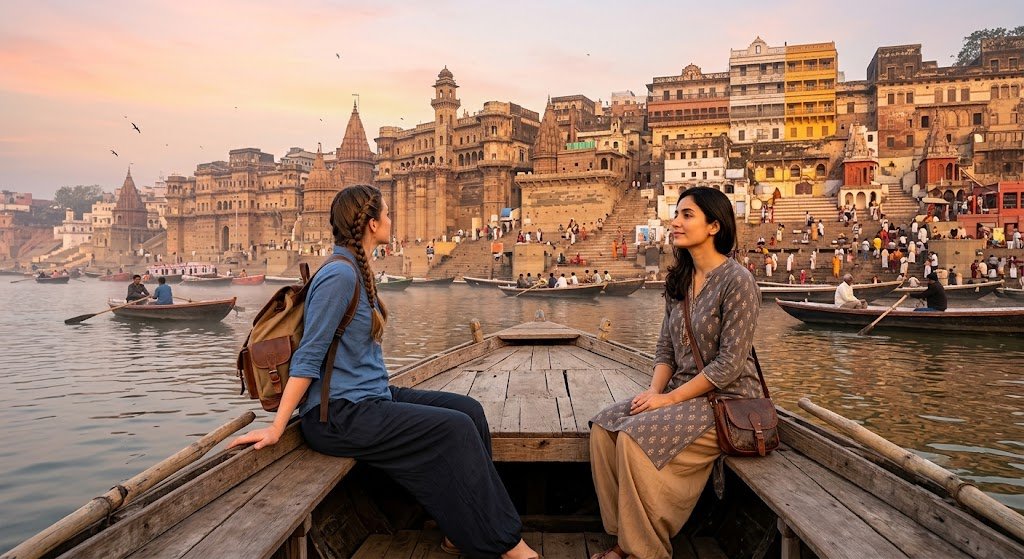
India is too large to experience in a single trip. Your choice of destinations should depend on what you want to experience.
Varanasi
Varanasi is one of India’s most important spiritual destinations and is located along the Ganges.
For many international travelers, the city provides an introduction to India’s living spiritual traditions.
Some experiences include:
- Ganga Aarti
- Sunrise boat ride on the Ganges
- Varanasi Ghats
- Ancient temples
- Local markets
- Traditional neighbourhoods
- Spiritual and cultural walks
For travelers interested in spiritual India, Varanasi can be an important part of an itinerary.
Agra
Agra is home to the Taj Mahal, one of India’s most recognised monuments.
A visit to Agra can easily be combined with Delhi and other destinations in northern India.
Delhi
Delhi is often the starting point for international visitors.
The city combines historic monuments, markets, museums, neighbourhoods and modern urban life.
It can also serve as a convenient starting point for a longer India itinerary.
Ayodhya
Ayodhya is an important pilgrimage destination associated with Lord Rama.
Travelers interested in Indian mythology, religious traditions, and pilgrimage can include Ayodhya alongside Varanasi and other spiritual destinations.
Bodh Gaya
Bodh Gaya is one of the most significant Buddhist pilgrimage destinations in the world.
It is particularly relevant for travelers interested in Buddhism, meditation, and India’s spiritual heritage.
Rishikesh
Rishikesh is widely associated with yoga, meditation, and spiritual retreats.
Travelers looking for wellness experiences can consider adding Rishikesh to their India itinerary.
Understanding Indian Culture as a First-Time Traveler
India has many regional cultures, languages, cuisines, and traditions.
There is no single experience that represents the whole country.
A few simple cultural practices can help make your journey more comfortable.
Dress respectfully
When visiting temples and religious places, modest clothing is generally appropriate. Some places may have specific dress requirements.
Remove shoes when required
Shoes are commonly removed before entering temples and some other sacred spaces.
Ask before taking photographs
India offers countless photographic opportunities, but always be respectful when photographing people, religious ceremonies, and private spaces.
Respect religious ceremonies
If you attend a prayer ceremony or festival, observe what people around you are doing and follow local guidance.
Be open to differences
Food, traffic, daily routines, social customs, and communication styles may be different from what you are accustomed to.
Approaching these differences with patience and curiosity can make the experience much more rewarding.
Indian Food: What Should Spanish-Speaking Travelers Expect?
Indian cuisine is extremely diverse.
The food you find in northern India can be very different from what you find in southern or eastern India.
Some popular dishes that international visitors may encounter include:
- Paneer Tikka – Grilled Indian cottage cheese with spices and vegetables
- Dal Tadka – Lentils cooked with aromatic spices and herbs
- Chole Bhature – Spiced chickpeas served with fried bread
- Masala Dosa – Crispy rice and lentil crepe filled with spiced potatoes
- Vegetable Biryani – Fragrant rice cooked with vegetables and spices
- Samosa – Crispy pastry filled with spiced potatoes and peas
- Palak Paneer – Paneer cooked in a mildly spiced spinach gravy
- Roti and Naan – Traditional Indian breads often served with vegetable dishes
- Vegetarian Thali – A selection of regional vegetarian dishes served together
Vegetarian food is widely available across India, offering travelers a wonderful variety of regional flavors and traditional dishes. From flavorful curries and lentils to paneer, rice dishes, breads, snacks, and traditional thalis, each region has its own vegetarian specialties worth discovering.
If you are not accustomed to spicy food, simply tell your restaurant or guide that you prefer mild or less spicy food.
It is also useful to remember that “spicy” can refer to the level of chilli heat rather than the overall flavour of the dish.
How Many Days Do You Need for an India Trip?
There is no single answer because India offers so many possible itineraries.
For a first trip, 10 to 14 days can provide enough time to explore several destinations without trying to cover the entire country.
A two-week itinerary could include:
Delhi → Agra → Ayodhya → Varanasi → Bodh Gaya → Delhi
Another itinerary could combine India’s famous historical destinations with its spiritual side:
Delhi → Agra → Jaipur → Varanasi
Travelers with more time can add destinations such as Rishikesh, Mathura, Vrindavan, or other regions.
The important thing is to leave enough time to experience each destination rather than spending most of your holiday traveling between cities.
When Is the Best Time to Visit India?
The best time to visit India depends heavily on the destinations you want to explore.
Northern India has different weather patterns from southern India, the Himalayan region, and desert areas.
For many popular northern destinations, the cooler months can be particularly comfortable for sightseeing.
However, festivals can also influence when travelers choose to visit.
For example, someone interested in Holi in India may plan their trip around the festival rather than simply choosing dates based on weather.
Similarly, travelers interested in Diwali, spiritual festivals, or pilgrimage experiences may want to build their itinerary around specific dates.
Always check regional weather conditions and festival dates before finalising your itinerary.
Traveling in India: Trains, Flights and Private Transportation
India has an extensive transportation network.
Depending on your itinerary, you may use:
- Domestic flights
- Trains
- Private cars
- Taxis
- Metro systems
- Auto-rickshaws
For a multi-city journey, combining transportation methods can save time.
For example, domestic flights can be useful for longer distances, while private transportation can provide flexibility for sightseeing between nearby destinations.
For first-time visitors, having transportation organized in advance can also reduce the stress of navigating unfamiliar cities.
Why Choose a Tour Company for Your India Journey?
For travelers visiting India for the first time, planning a journey with a professional tour company can make the experience more comfortable and organised. India is a large country with different languages, cultures, transportation options, and travel experiences, so having local support can make it easier to navigate your itinerary.
A professionally planned tour can help coordinate transportation, accommodation, sightseeing, local guides, and cultural experiences, allowing you to spend more time enjoying your journey and less time managing travel arrangements.
This can be especially helpful for travelers planning a spiritual tour of India, where an itinerary may include several destinations such as Delhi, Agra, Ayodhya, Varanasi, and Bodh Gaya.
Local assistance can also help you discover India with greater comfort while making the most of your time.
Experiencing Spiritual India
For many international visitors, India’s spiritual traditions are one of the main reasons for travelling to the country. For Spanish-speaking travelers following an India travel guide, exploring these traditions can be a meaningful way to understand India’s culture, history, and spiritual heritage.
A spiritual journey can include much more than visiting temples.
You might experience:
- Ganga Aarti in Varanasi
- Sunrise on the Ganges
- Temple visits
- Yoga and meditation
- Buddhist heritage in Bodh Gaya
- Pilgrimage sites in Ayodhya
- Spiritual experiences in Rishikesh
- Traditional Indian ceremonies
- Cultural interactions with local communities
The key is to approach these experiences respectfully and with an open mind.
Planning Your India Journey with Dhyanam India Tours
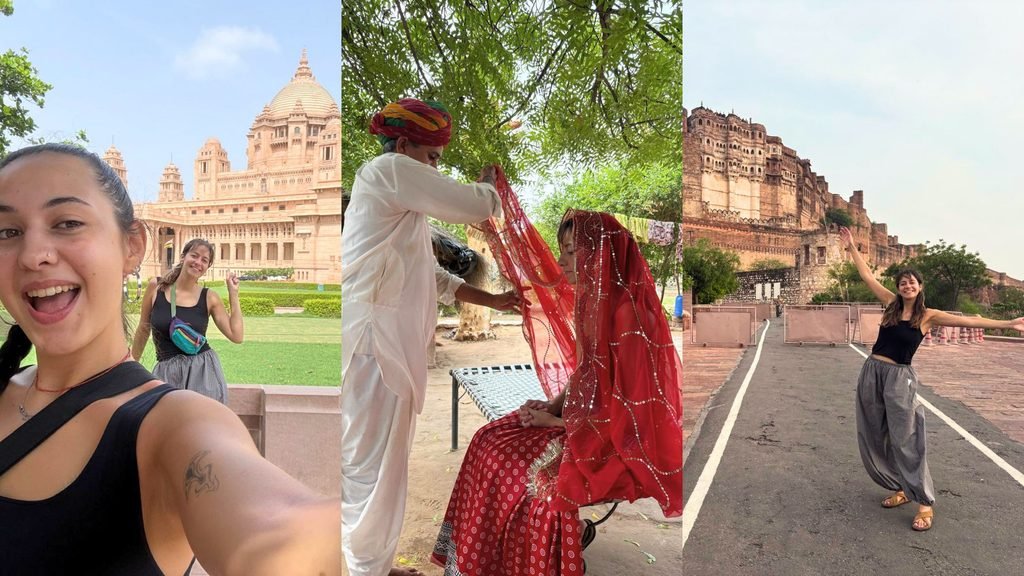
Planning a first trip to India can be overwhelming, especially when you want to combine several cities and meaningful experiences.
Dhyanam India Tours specialises in creating journeys around India’s spiritual, cultural and heritage destinations.
Instead of following a one-size-fits-all itinerary, your journey can be planned around what interests you most — whether that means Varanasi and Ganga Aarti, pilgrimage destinations, yoga and meditation, Indian festivals, cultural experiences or a combination of these.
For Spanish-speaking travelers, planning can also make it easier to communicate your interests and understand what to expect during your journey.
If you are considering traveling to India from Spain, Mexico, or another Spanish-speaking country, you can contact Dhyanam India Tours to discuss your preferred destinations, travel dates, and experiences.
India Travel Guide for Spanish-Speaking Travelers: FAQs
Is India good for Spanish-speaking travelers?
Yes. Spanish-speaking travelers can visit India comfortably with appropriate planning. English is commonly used in India’s tourism sector, while local assistance can make communication and travel arrangements easier.
Do Spanish citizens need a visa for India?
Travelers should obtain the visa required for their nationality before traveling. Spain is listed by India’s official tourism information among nationalities with e-Visa options. Always check the latest requirements on the official Indian government visa website before applying.
What are the best places to visit in India for first-time travelers?
Popular choices include Delhi, Agra, Jaipur, and Varanasi. Travelers interested in spirituality can also consider Ayodhya, Bodh Gaya and Rishikesh.
How long should I spend in India?
A 10–14 day trip can provide a good introduction to several destinations, although longer trips allow you to explore India more slowly and include additional regions.
Is India suitable for a spiritual holiday?
Yes. India has numerous destinations associated with Hinduism, Buddhism, yoga, meditation and pilgrimage. Varanasi, Ayodhya, Bodh Gaya and Rishikesh are examples of destinations that can be included in a spiritual itinerary.
Can Dhyanam India Tours create a customised India itinerary?
Yes. A customised itinerary can be planned around your preferred destinations, interests, travel duration and experiences.
Start Planning Your India Journey
India is not simply a destination to check off a list. It is a country best experienced through its cities, people, traditions, food, landscapes, and everyday moments. This India travel guide for Spanish-speaking travelers is a starting point for planning a journey that matches your interests and travel style.
Whether you want to explore Varanasi, visit the Taj Mahal, discover India’s spiritual heritage, experience Holi, practise yoga and meditation, or combine several experiences in one journey, careful planning can help you make the most of your time.
If you are a Spanish-speaking traveler planning your first trip to India, Dhyanam India Tours can help you create a journey around the experiences that matter to you.
Plan your India journey with Dhyanam India Tours and discover India beyond the usual tourist route.