

Vedic Astrology: Understanding Jyotish and Its Spiritual Connection to India
India is home to many ancient traditions that continue to influence spiritual life, culture, and daily practices. Among them, Vedic Astrology, commonly known as Jyotish or Jyotish Shastra, has a special place.
For centuries, people in India have looked to the movements of celestial bodies, lunar cycles, and traditional astrological calculations when considering important aspects of life, religious observances, and auspicious timing. The tradition is also closely connected with India’s broader heritage of Sanskrit learning, philosophy, rituals, and spiritual practices.
For international travellers, learning about Vedic Astrology in India can provide a fascinating way to understand another aspect of Indian culture.
Are you curious about Vedic Astrology and want to understand how it is practised in India?
Dhyanam India Tours organises Vedic Astrology sessions with experts for travellers who want to explore India’s spiritual traditions and learn more about Jyotish. Through these sessions, travellers have the opportunity to understand the fundamental concepts of Vedic Astrology and, at the same time, learn about its significance in Indian culture. They can also explore traditional astrological concepts and ask an expert questions directly. As a result, these sessions offer a meaningful way to gain greater understanding of India’s rich spiritual heritage.
What Is Vedic Astrology?
Vedic Astrology, or Jyotish, is the traditional Indian system of astrology. The Sanskrit term Jyotisha is associated with celestial knowledge and the measurement of time. Jyotisha is also traditionally counted among the six Vedāṅgas, auxiliary disciplines associated with the study and practice of the Vedas.
Modern Vedic astrology uses concepts such as:
- Zodiac signs or Rashi
- Planets or Grahas
- Nakshatras, or lunar mansions
- Houses or Bhavas
- Kundli, or birth chart
- Dasha systems used for astrological timing
- Navagraha, the nine planetary influences
- Traditional methods for interpreting planetary positions
It is important to understand that astrology is a traditional cultural and interpretive system rather than a scientifically established method for predicting future events. Different schools and practitioners may also interpret a birth chart differently.
What Does Jyotish Mean?
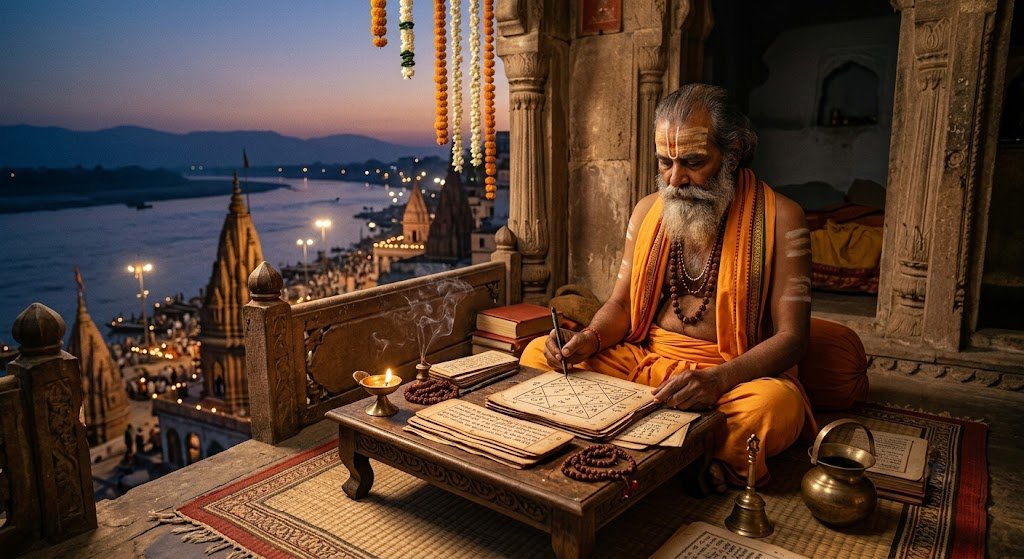
The word Jyotish is commonly translated as “light” or “celestial knowledge.” In the Indian tradition, Jyotisha developed alongside astronomical observation and calendar calculation.
The early surviving Vedāṅga Jyotiṣa is primarily concerned with calendrical matters such as lunar months, seasonal cycles, and the timing required for ritual practices. The later development of Indian astral traditions introduced increasingly elaborate systems for interpreting celestial positions.
This historical development is important because Vedic Astrology should not be understood as a single unchanged system that appeared in its present form thousands of years ago. It evolved through different texts, scholars, regional traditions, and methods over time.
What Is a Kundli?
One of the most commonly searched terms associated with Vedic Astrology is Kundli, also called a birth chart.
A Kundli is traditionally prepared using information such as:
- Date of birth
- Time of birth
- Place of birth
The resulting chart represents the positions of celestial bodies at the time of birth according to the chosen astrological system.
A traditional astrologer may examine the chart to discuss areas such as:
- Personality and tendencies
- Relationships
- Career and work
- Family matters
- Important life periods
- Traditional planetary influences
- Auspicious timing
The interpretation depends on the particular school of Jyotish and the experience and approach of the practitioner.
What are the Navagraha?
The Navagraha, meaning the “nine grahas,” are an important part of Hindu religious and astrological traditions.
They traditionally include:
- Surya – Sun
- Chandra – Moon
- Mangala – Mars
- Budha – Mercury
- Guru – Jupiter
- Shukra – Venus
- Shani – Saturn
- Rahu – the ascending lunar node
- Ketu – the descending lunar node
Although commonly described as the “nine planets” in English, this is a traditional classification rather than a modern astronomical one. The Sun and Moon are included, while Rahu and Ketu represent the lunar nodes.
Navagraha traditions can be encountered in temples and religious settings across India, where planetary deities form part of broader Hindu devotional practices.
What Are Nakshatras in Vedic Astrology?
Another important concept in Indian astrology is the Nakshatra.
Nakshatras are lunar divisions used in Indian astronomical and astrological traditions. They provide another framework for understanding the Moon’s position and are an important part of many systems of Jyotish.
There are traditionally 27 Nakshatras, with each associated with particular symbolic qualities and traditions.
For someone exploring Vedic Astrology for the first time, understanding Nakshatras can help explain why Indian astrology is different from the simplified zodiac-based astrology commonly encountered in popular Western horoscopes.
How Is Vedic Astrology Different From Western Astrology?
One of the most common questions is: What is the difference between Vedic Astrology and Western Astrology?
There are several differences in terminology, calculations, and interpretive traditions.
Vedic astrology commonly uses a sidereal zodiac, which takes the position of the stars into consideration. Western astrology generally uses a tropical zodiac connected to the seasonal position of the Sun.
Vedic astrology also places considerable emphasis on:
- Nakshatras
- Dashas
- Rashi
- Bhavas
- Navagraha
- Divisional charts
- Traditional planetary relationships
However, it is important not to reduce either tradition to one simple formula. Both contain multiple schools and approaches.
Vedic Astrology and Indian Spirituality
For many people, Vedic Astrology is not simply about predicting the future. It forms part of a much wider cultural environment involving spirituality, ritual, philosophy, temples, festivals and traditional knowledge.
This is particularly interesting for travellers visiting India.
A person interested in Jyotish may also be interested in:
- Meditation
- Yoga
- Hindu temples
- Sanskrit traditions
- Ganga Aarti
- Sacred rivers
- Pilgrimage
- Ayurveda
- Spiritual retreats
- Hindu festivals
- Traditional rituals
- Indian philosophy
This connection makes Vedic Astrology a natural part of a broader spiritual journey through India.
Why Is Varanasi Important for Vedic Astrology?
When people search for Vedic Astrology in Varanasi, they are looking at a city with a long association with Sanskrit learning, philosophy, spirituality, and traditional knowledge.
Varanasi, also known as Kashi or Banaras, has historically been an important centre of learning. Research on the history of astrology in Banaras documents the teaching and institutional study of Jyotisha, including at Sanskrit educational institutions.
For visitors, Varanasi offers the opportunity to experience this cultural environment alongside some of India’s most significant spiritual traditions.
A Varanasi journey can include experiences such as:
- Sunrise boat rides on the Ganges
- Ganga Aarti at Dashashwamedh Ghat
- Visits to important temples
- Exploring the ancient ghats
- Meditation and yoga experiences
- Walking through the old lanes of Kashi
- Learning about Sanskrit and Indian traditions
- Experiencing local spiritual and cultural life
The city is therefore particularly appealing to travellers interested in Indian spirituality, Hindu culture, Vedic traditions and sacred travel.
Can You Experience Vedic Traditions During a Trip to India?
Yes. Travellers interested in Vedic knowledge can design an India journey around cultural and spiritual experiences rather than conventional sightseeing alone.
Depending on your interests, a spiritual itinerary can combine destinations such as:
Varanasi
Explore the spiritual atmosphere of Kashi, the Ganges ghats, temples, traditional rituals, and evening Ganga Aarti.
Ayodhya
Discover the religious and cultural traditions associated with one of India’s important sacred cities.
Bodh Gaya
Experience one of the world’s most significant Buddhist pilgrimage destinations and an important centre for meditation and spiritual reflection.
Mathura and Vrindavan
Explore temples, devotional traditions and the cultural heritage associated with Krishna.
Rishikesh
Combine yoga, meditation, the Ganges and Himalayan spiritual traditions.
Haridwar
Experience sacred bathing traditions, temples and Ganga Aarti along the Ganges.
A carefully planned itinerary can bring these experiences together according to the traveller’s interests, available time and preferred pace.
Vedic Astrology as a Cultural Experience for International Travellers
Interest in Vedic Astrology among international travellers has grown alongside wider interest in yoga, meditation, Ayurveda and Indian spirituality.
For visitors from Europe, Latin America, North America and other parts of the world, exploring Jyotish can provide a different perspective on Indian culture.
Rather than treating astrology as an isolated attraction, travellers can experience it within the larger context of India’s living traditions.
For example, a traveller interested in Vedic Astrology might combine:
Vedic Astrology → Yoga → Meditation → Temple visits → Ganga Aarti → Sacred cities → Indian philosophy
This creates a more meaningful cultural journey than simply visiting tourist landmarks.
Is Vedic Astrology Scientific?
This is an important question, especially for readers researching the subject online.
Vedic Astrology is a traditional astrological system, not an established scientific method for predicting future events.
Its cultural, historical, and religious importance can be studied without presenting astrological predictions as scientific facts.
For this reason, readers should distinguish between:
- Historical information about Jyotish
- Traditional Hindu beliefs
- Astrological interpretations
- Astronomical observations
- Scientifically established knowledge
Being clear about this distinction makes information about Vedic Astrology more balanced and trustworthy.
Why Explore Vedic Astrology in India?
Reading about Jyotish online can introduce you to the subject, but travelling through India can provide cultural context that is difficult to experience through a screen.
In India, traditions connected with astrology exist alongside temples, festivals, Sanskrit education, rituals, yoga, meditation and pilgrimage.
A journey can therefore become an opportunity to understand how traditional knowledge fits into the wider cultural landscape of India.
For travellers interested in spirituality, this can be especially meaningful.
Plan a Spiritual Journey Through India With Dhyanam India Tours
If you are interested in Vedic Astrology, Indian spirituality, yoga, meditation and sacred places, your journey can be designed around more than sightseeing.
Dhyanam India Tours helps travellers explore India through meaningful spiritual and cultural experiences. Depending on your interests, your itinerary can include destinations such as Varanasi, Ayodhya, Bodh Gaya, Vrindavan, Mathura, Rishikesh, and other important spiritual destinations in India.
Whether you are planning your first visit to India or returning to explore its spiritual traditions more deeply, a personalised itinerary can help you experience India’s culture at a comfortable pace.
From the spiritual atmosphere of Varanasi to the peaceful environment of Himalayan destinations, India offers many ways to create a journey focused on culture, reflection, and discovery.
Interested in a Vedic Astrology session with an expert in India?
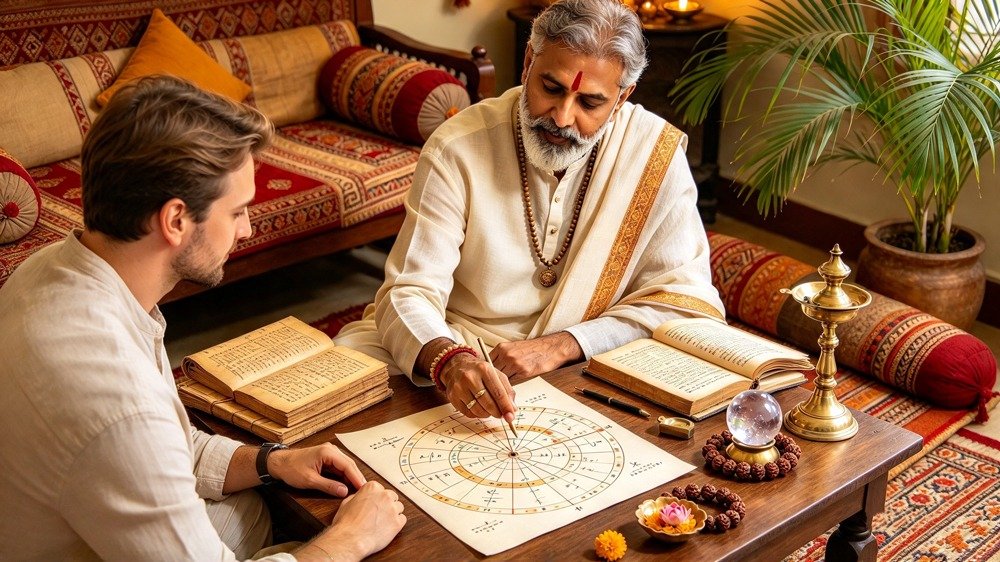
Plan a spiritual trip to India. Contact Dhyanam India Tours to discuss your itinerary and arrange a session as part of your spiritual journey.
Frequently Asked Questions About Vedic Astrology
What is Vedic Astrology?
Vedic Astrology, commonly known as Jyotish, is the traditional Indian system of astrology. It uses concepts such as planetary positions, zodiac signs, Nakshatras, houses, and Dashas to interpret a birth chart according to particular astrological traditions.
What is Jyotish Shastra?
Jyotish Shastra is a traditional Indian discipline associated with celestial observation, calendrical calculation, and astrology. Its history includes early calendrical traditions as well as later developments in horoscopic astrology.
What is a Kundli?
A Kundli is a traditional Indian birth chart prepared using a person’s date, time, and place of birth. Astrologers may interpret planetary positions and other chart factors according to their particular school of Jyotish.
What are the 27 Nakshatras?
The 27 Nakshatras are lunar divisions used in Indian astronomical and astrological traditions. They are an important component of many Vedic astrology systems.
What are the Navagraha?
The Navagraha are nine traditional celestial influences in Hindu astrology and religious tradition: Sun, Moon, Mars, Mercury, Jupiter, Venus, Saturn, Rahu, and Ketu.
Is Vedic Astrology the same as Western Astrology?
No. Vedic and Western astrology use different historical traditions and calculation systems. Vedic astrology commonly uses a sidereal zodiac and places particular emphasis on Nakshatras, Dashas, and other components of Jyotish.
Why is Varanasi associated with Vedic Astrology?
Varanasi has a long history as a centre of Sanskrit learning, philosophy, and traditional knowledge. Jyotisha has also been taught and studied in Banaras, making the city an interesting destination for people exploring Indian spiritual traditions.
Can I include Varanasi in a spiritual tour of India?
Yes. Varanasi can be combined with destinations such as Ayodhya, Bodh Gaya, Mathura, Vrindavan, Rishikesh and Haridwar depending on your interests and available travel time.
Does Dhyanam India Tours organise Vedic Astrology sessions with experts?
Yes. Dhyanam India Tours organises Vedic Astrology sessions with experts for travellers interested in Jyotish and India’s spiritual traditions. Contact us to discuss your interests, preferred travel dates, and session availability.
Final Thoughts
Vedic Astrology is more than a collection of horoscope predictions. It is part of a much broader Indian intellectual and cultural tradition that has developed through centuries of astronomical observation, calendrical practices, religious traditions, and astrological interpretation.
For travellers, learning about Jyotish can open the door to a more profound understanding of India’s spiritual heritage.
And when that interest is combined with visits to sacred cities, temples, the Ganges, meditation centres, and traditional cultural sites, a trip to India can become a much more meaningful experience.
If Vedic Astrology and Indian spirituality interest you, consider experiencing these traditions in their cultural setting with a thoughtfully planned spiritual journey through India.
Dhyanam India Tours can help you plan a personalised India itinerary based on your spiritual, cultural, and travel interests.